Free 20-page pocket guide
Bugs, flies, rigs & knots for Northern Utah
Bug ID, a hatch calendar, fly picks, simple rigs, three knots and catch-and-release tips for Northern Utah’s mountain streams and alpine lakes. Read it here, or download the 5×7 PDF to print or keep on your phone.
Welcome
Thanks for fishing my flies.
I’ve spent 47 years on the water, and most days come down to one question: what are the fish eating right now? This little guide is my answer, kept short enough to read on the tailgate.
Inside you’ll find the bugs that matter in Northern Utah, when they hatch, which of my flies to tie on, and the rigs and knots I use every day. Every fly I sell is meticulously tied and fished hard before it ever goes in a box.
Keep it in your pack, get it wet, and let me know how you do.
— David Blackett
Fly maker, Wasatch Flies · Guide, Wasatch Fly Fisher
How to Pick a Fly
Before you open the box, look at the water.
- Watch first. Spend two minutes looking. Rises, bugs in the air, shucks in the foam. Flip a rock and see what crawls.
- Match size first. If the bugs are small, go small. A fly the right size in the wrong color beats the reverse.
- Then the profile. Skinny or bulky, long or short. Hold your fly next to the bug.
- Color last. Go a shade darker than you think. Dull natural tones fool more fish than bright ones.
- Fish the right level. No rises? Most of the eating is under the surface. Get a nymph down near the bottom.
- Change after ten good drifts. If nothing happens, change depth first, then size, then fly.
Bug ID
Midges
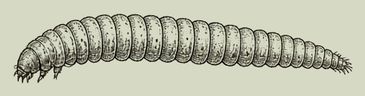
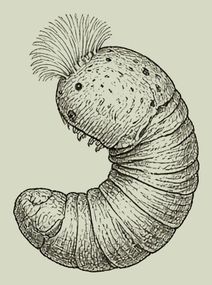
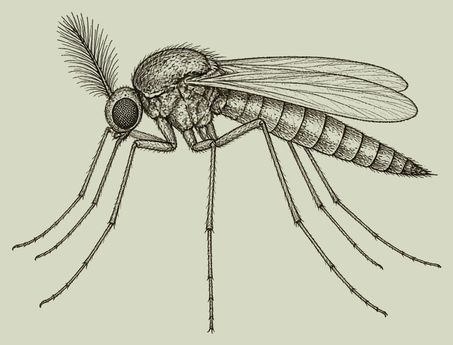
Tiny two-winged flies that hatch every month of the year. In winter they may be the only bug on the water, and trout eat them by the hundreds.
- Size: #18–24
- When: All year, peak in winter and early spring
- Look for: Clusters on the surface, tiny rings in slow water
- Wasatch Flies: Real McCoy Micro, Tungsten Blue Grey & Copper
Mayflies
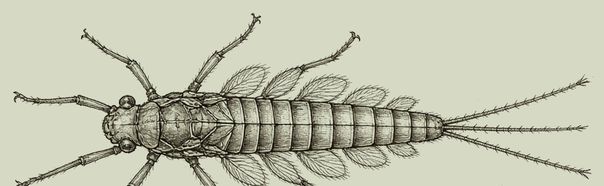
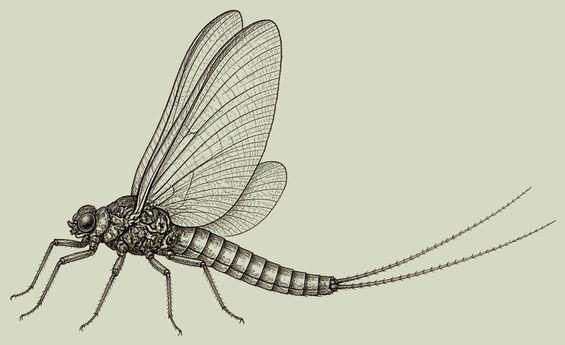
Upright sailboat wings and two or three long tails. Blue-Winged Olives come on cool, cloudy days in spring and fall. PMDs, March Browns and Green Drakes fill in the warmer months.
- BWOs: #18–22, Mar–Apr and Sep–Nov
- PMDs: #14–18, May–Aug
- Green Drakes: #10–12, late June–August
- Wasatch Flies: The Real McCoy, Tungsten Blue Grey & Copper
Caddis
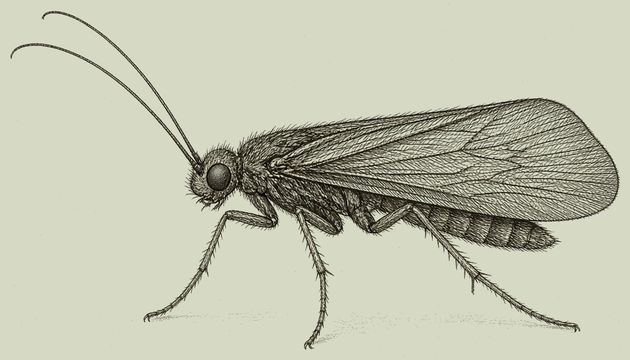
Moth-like flies with wings folded like a tent. They hatch fast and skitter, so fish often chase them. Larvae live on the bottom, many in little cases.
- Size: #14–18
- Mother’s Day Caddis: Mid-spring, before runoff
- Summer/fall caddis: June–October, evenings
- Wasatch Flies: Tungsten Caddis Green & Copper
Stoneflies
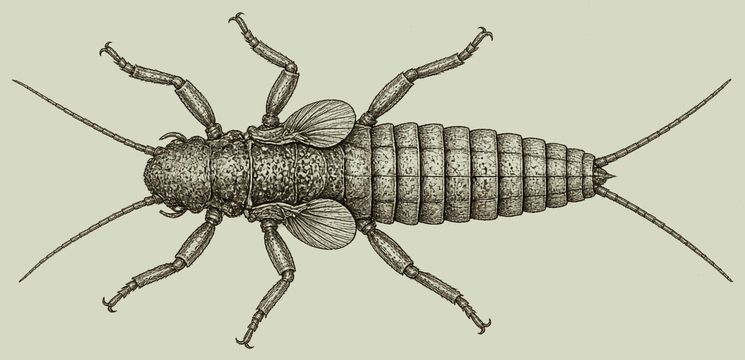
Big, flat bugs with two tails and wings folded flat over the back. They crawl out on rocks to hatch, so look for empty shucks on boulders. Salmonflies are here in Northern Utah, along with golden stones and little yellow sallies.
- Salmonflies & goldens: #4–10, peak in June
- Yellow sallies: #14–16, June–July
- Look for: Shucks on rocks, big bugs on streamside willows
- Wasatch Flies: Olive Warrior, Brown Sugar Perdigon (sallies)
Lake Bugs
Alpine lakes have their own menu. They usually open after runoff and run 2–4 weeks behind valley water.
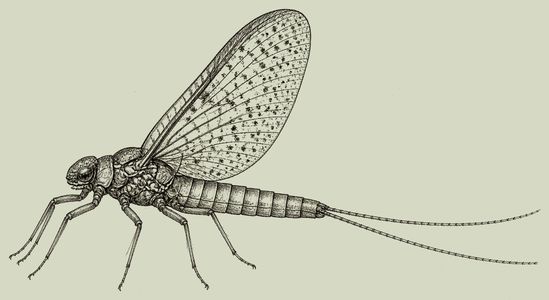
Callibaetis
Speckle-winged lake mayfly. May–July, #14–18. Fish nymphs slowly near weed beds.
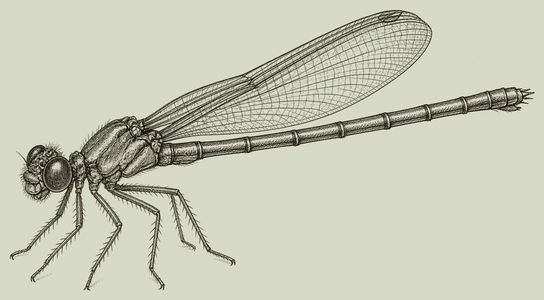
Damsels
Slender swimmers. Late June through mid-summer, #10–14. Slow strips toward shore.
Chironomids
Lake midges, the biggest food source in stillwater. #12–18. Hang one under an indicator just off the bottom. Try the Real McCoy Micro.
Leeches & scuds
On the menu all year. Slow strips with a dark fly, or a small copper nymph for scuds.
Bug Trends
Trout food follows the seasons. Midges carry the cold months, spring brings mayflies and big stoneflies, and summer belongs to caddis and land bugs. When fall cools the water, small olives return before winter settles back to midges.
- Winter: midges, scuds and slow, deep nymphing.
- Spring: BWOs, then PMDs, caddis and stoneflies. Salmonflies peak around June.
- Summer: evening caddis, damsels on lakes, hoppers and ants.
- Fall: BWOs come back, terrestrials hang on, then midges again.
Relative activity, not a forecast. Higher, colder water runs weeks behind.
Hatch Calendar
Month by month: which bugs are hatching, hook sizes, and which Wasatch Flies pattern to tie on.
Wasatch Flies Picks
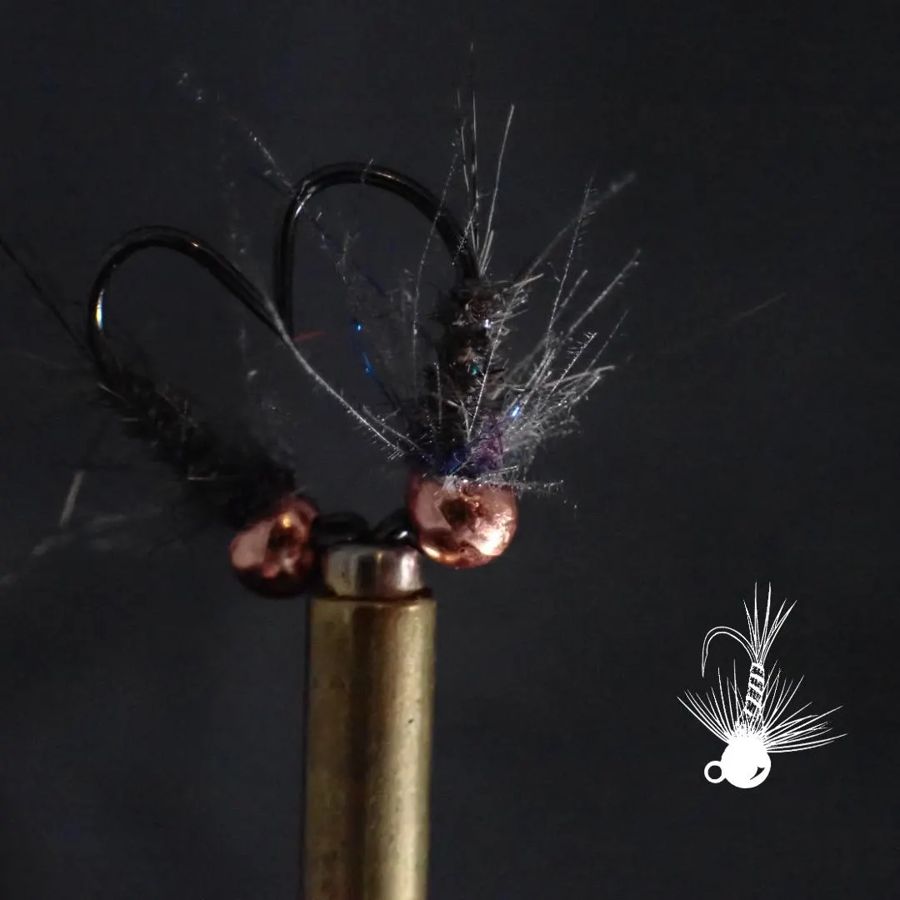
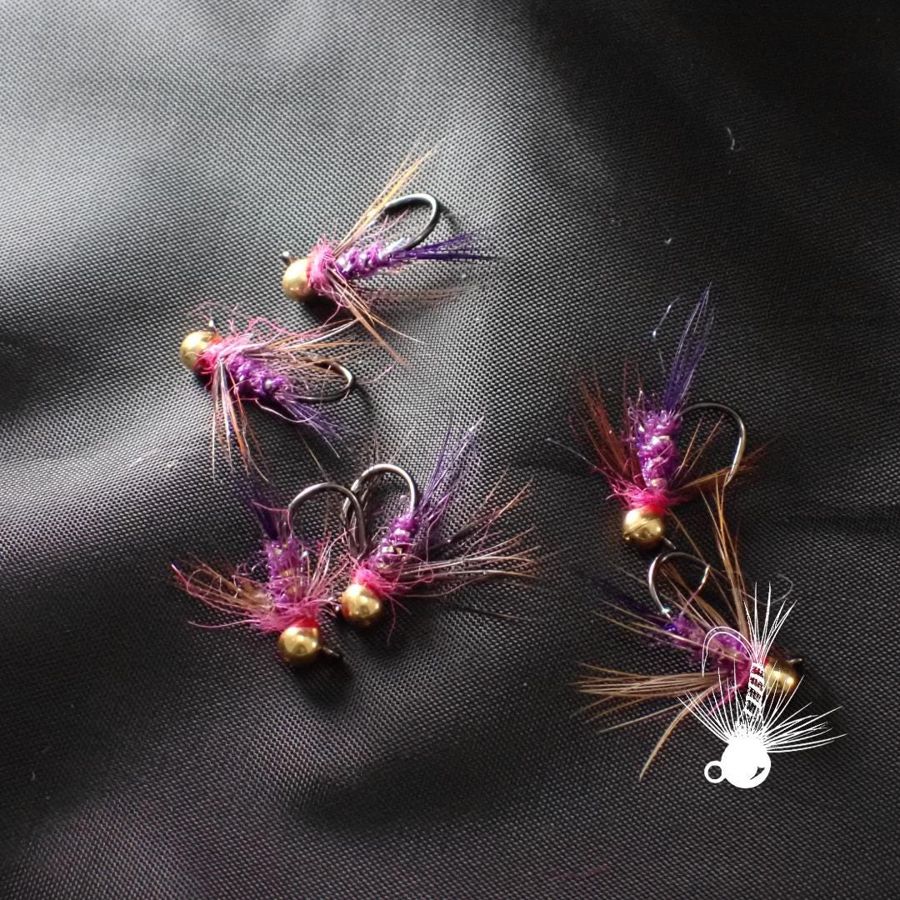
Tungsten Blue Grey & Copper
#16–18 · 3.3 mm BWOs and midges. Fish it deep on a tight line or under an indicator on cool, cloudy days.
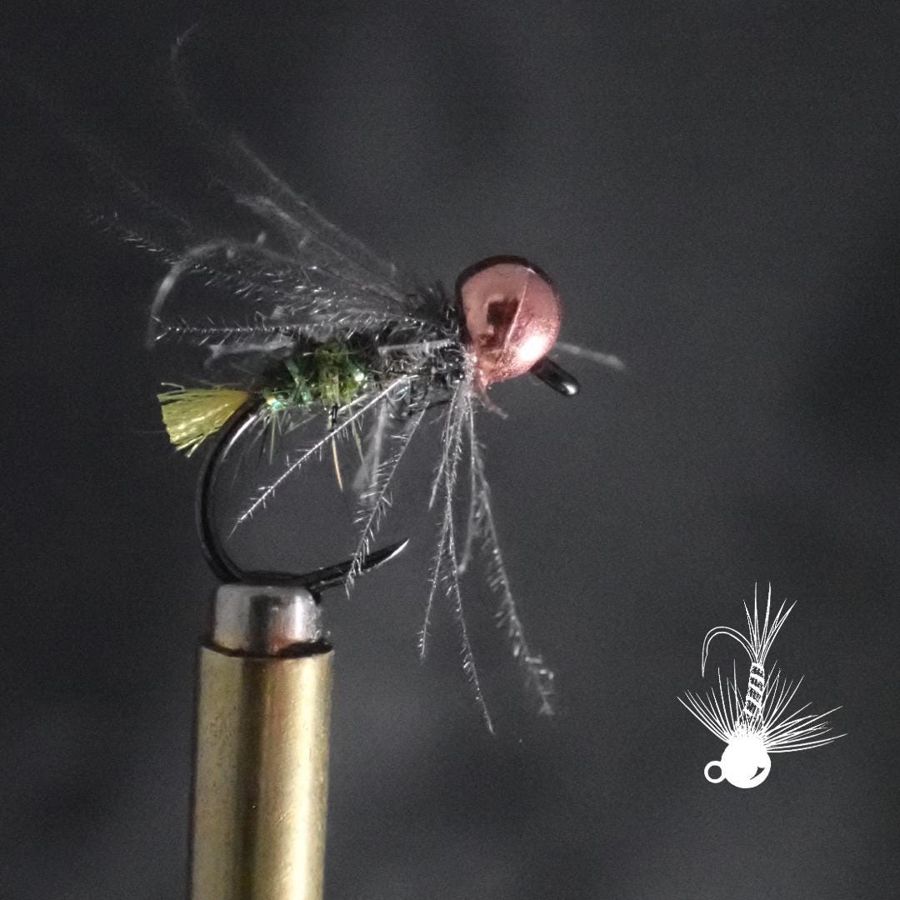
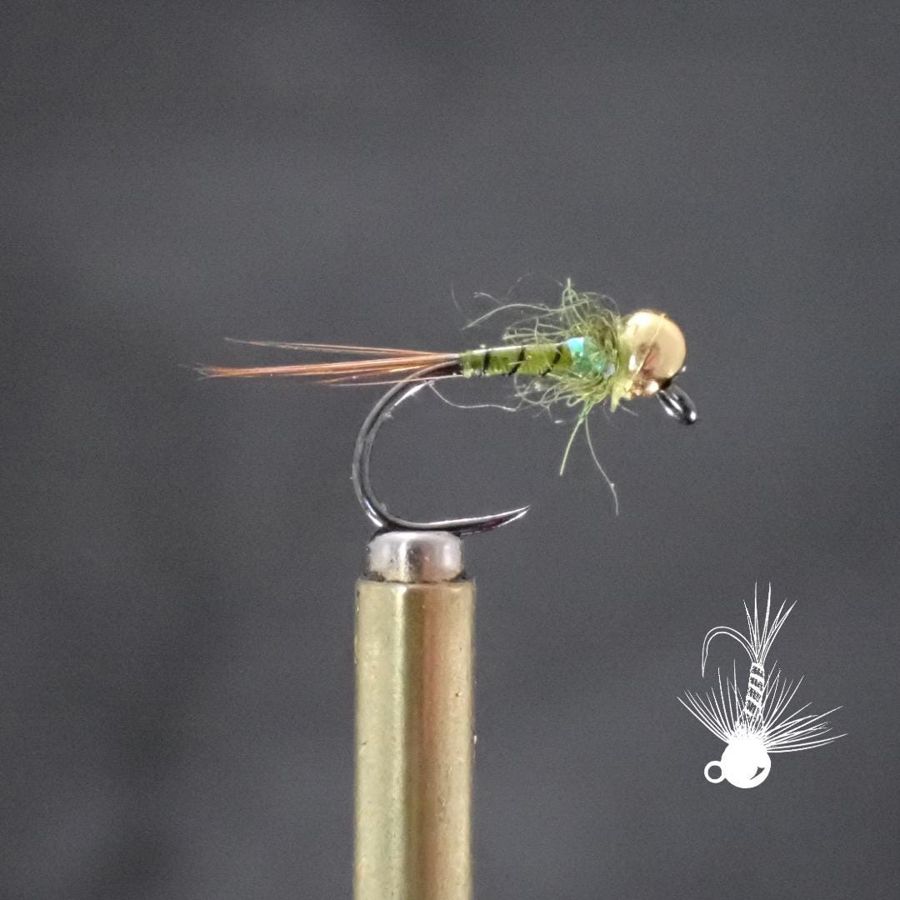
Tungsten Caddis Green & Copper
#16 · 2.8/3.3 mm Caddis larvae and pupae. Dead drift, then let it swing up at the end.
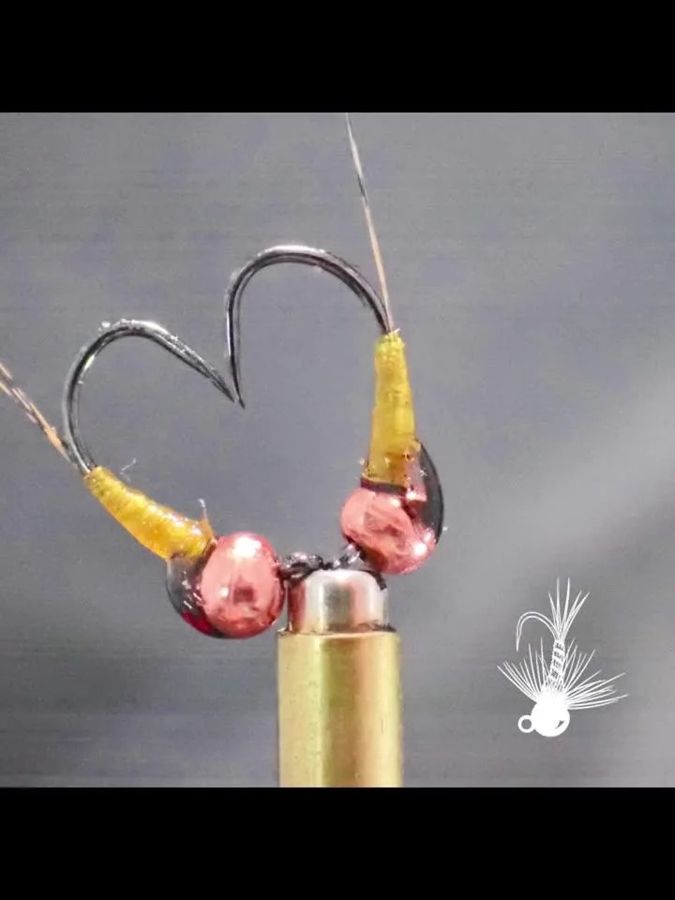
Brown Sugar Perdigon
#16–20 · 2.8/3.3 mm Slim, fast-sinking perdigon for PMDs, yellow sallies and mahogany duns. Fish it on a tight line in faster runs.
Signature Fly
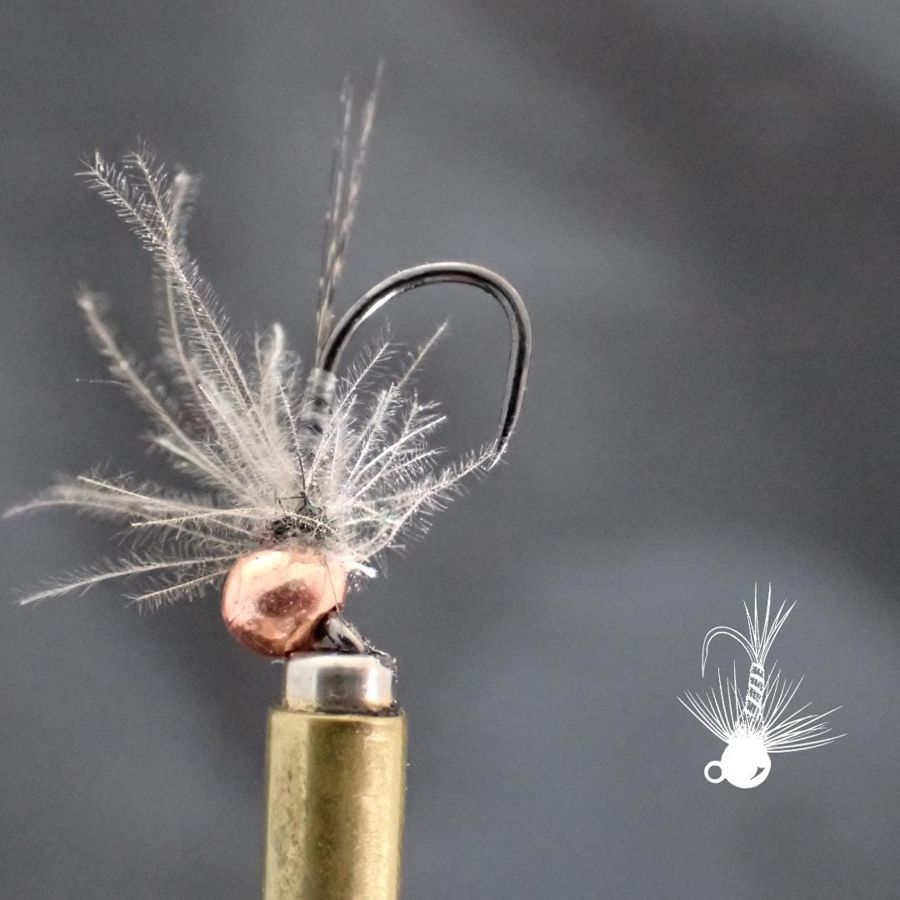
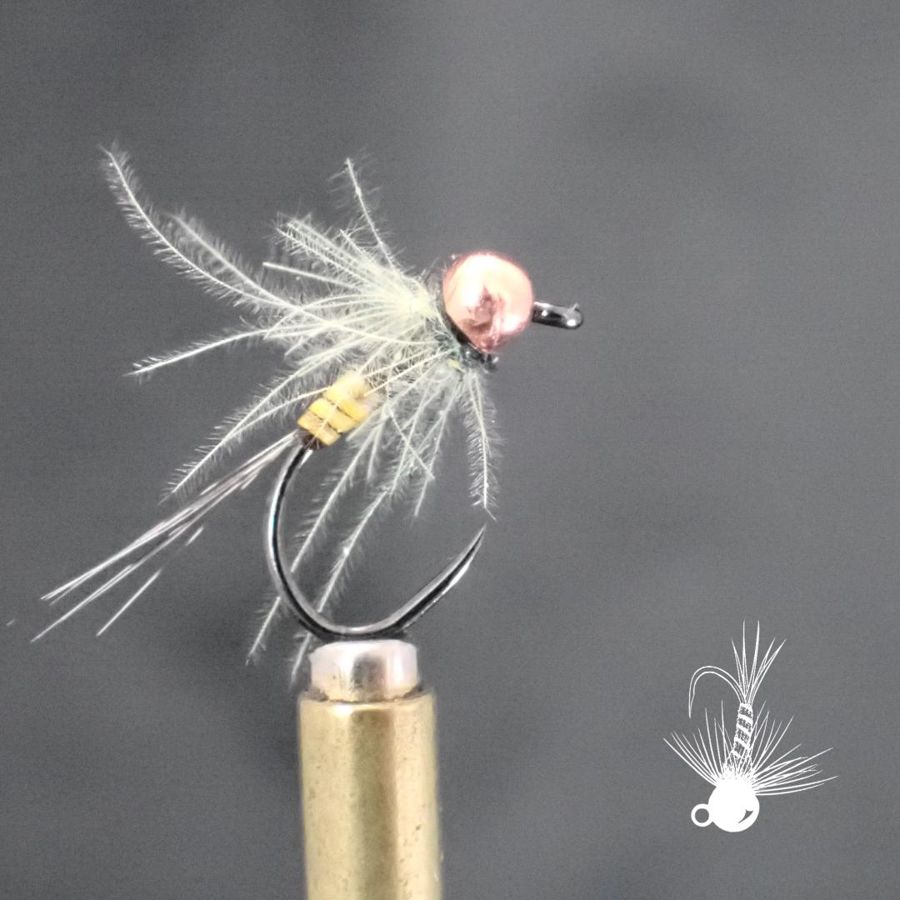
The Real McCoy
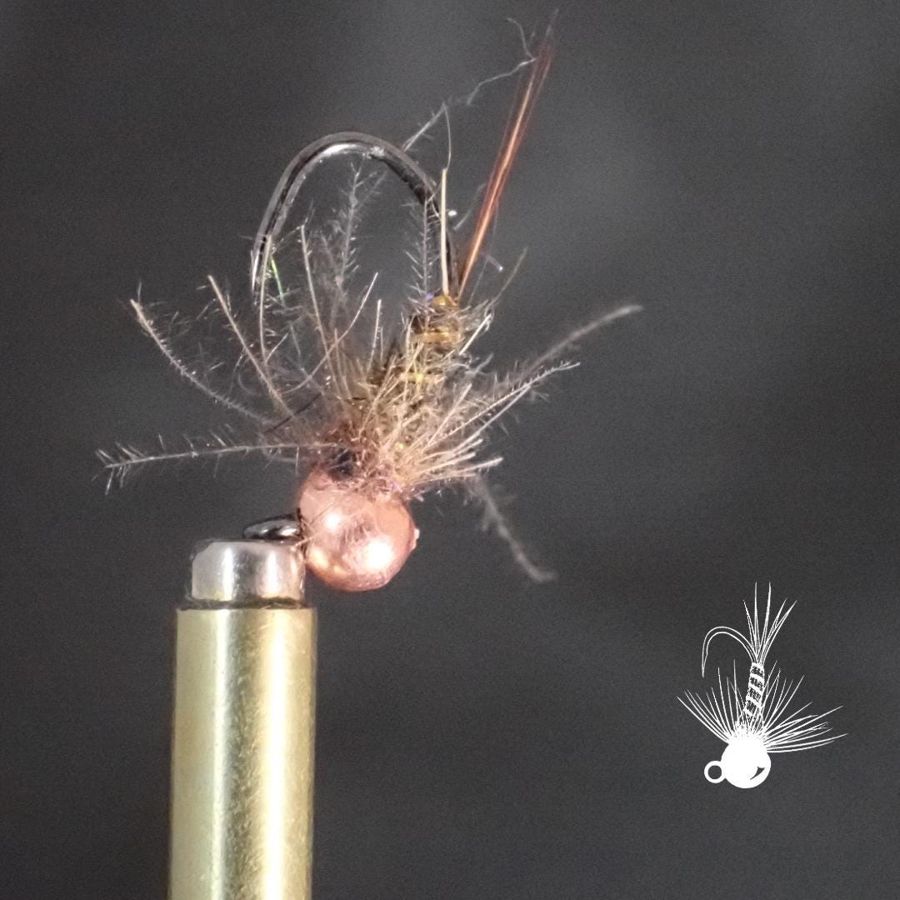
My best seller, and the first fly I’d tie on almost anywhere.
- Sizes: #16, #18, #20
- Bead: copper tungsten, 2.8 or 3.3 mm, on a barbless jig hook
- Body: copper tinsel, golden brown dubbing, CDC collar
- Imitates: mayfly nymphs, caddis and scuds
How to fish it: Point fly on a tight line, or below an indicator in riffles and runs. Lighter sizes make a great dropper under a dry.
“100% fish catchers especially tight line nymphing them!” — Jeffrey, Etsy review
Rigs & Knots
Five simple rigs
Dry fly
Rising fish. 9 ft 5X leader.
Dry-dropper
Fish rising and eating below. Tie the nymph to the dry’s hook bend.
Nymph
Most days. Indicator about 1.5× the water depth.
Streamer
Big fish, cloudy days. 0X–2X, strip it back.
Stillwater
Alpine lakes. Set depth so the fly hangs just off bottom.
Three knots
Improved Clinch Tippet to fly
Thread through eye, wrap 5–7 times, back through the first loop, then through the big loop. Wet it, pull snug, trim.
Surgeon’s Knot Tippet to leader
Lay lines side by side, form a loop, pass both tag ends through twice. Wet and pull all four ends evenly.
Perfection Loop Loop in leader butt
Loop the tag behind the line, make a second loop in front, pass the tag between them, pull the second loop through the first. Snug it.
Etiquette & Catch and Release
On the water
- Give other anglers room. If in doubt, ask.
- Don’t wade through water someone is fishing.
- Leave no trace. Pack out line and tippet.
- Clean, inspect and dry waders between waters.
Releasing fish
- Use barbless hooks or pinch the barb.
- Keep fish in the water and wet your hands.
- Use a rubber net and forceps. Work fast.
- Hold it facing upstream until it swims off.
- On hot afternoons above 68°F, give the fish a rest and fish early.
Fish With David
Guided full-day trips: 6 hours of fishing plus lunch, one guide per angler.
Catch fish or fish again, on David.
Guided trips Book a trip Gift certificates
Shop the flies at wasatchflies.etsy.com · Free shipping on orders $35+ · Download the PDF